

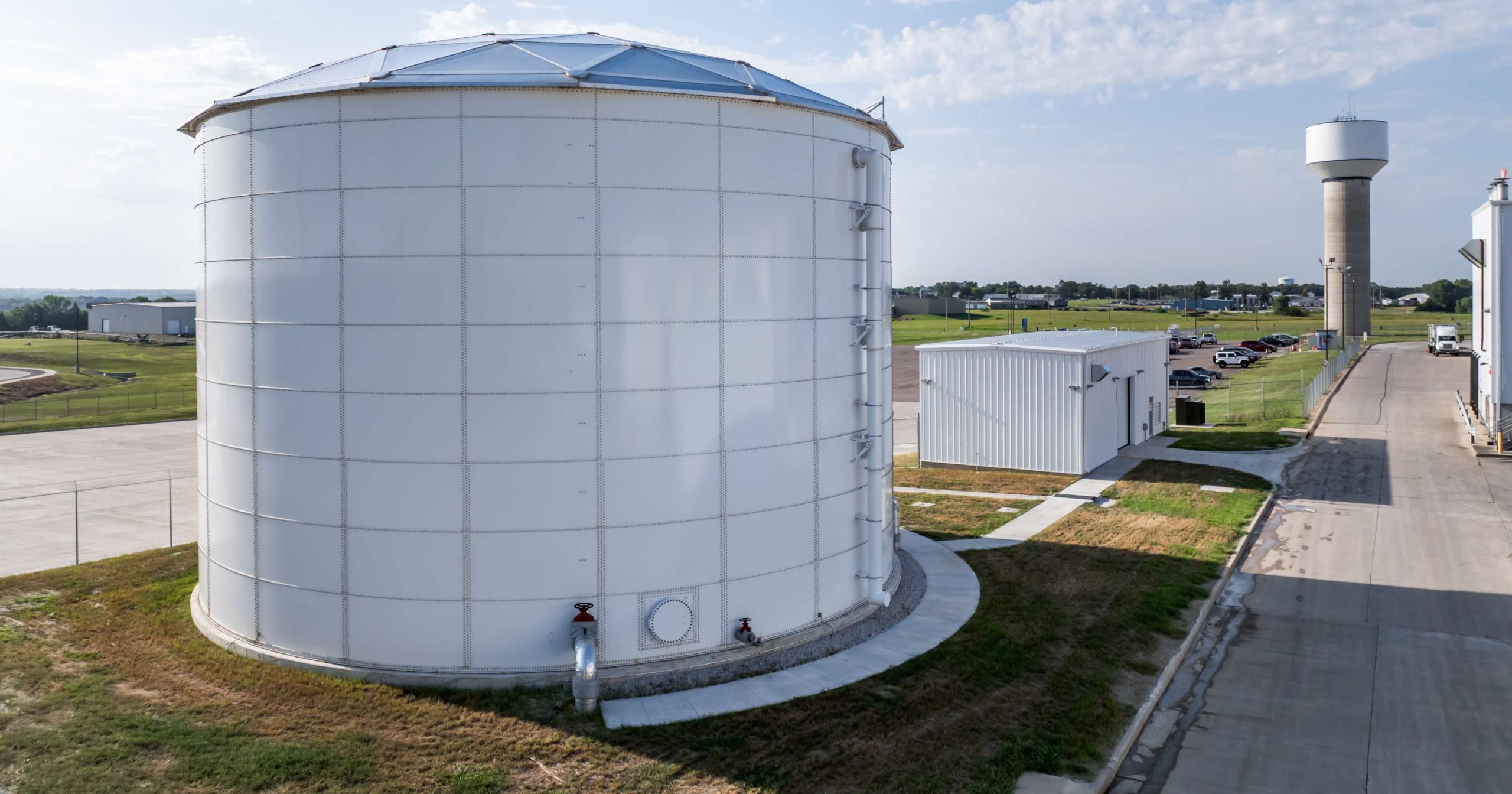
Working Under Pressure to Support Creekstone Farms’ Facility Water Needs
October 23, 2026
Water is fundamental to agriculture, daily life, and industry alike. Whether growing crops, taking a shower, or operating a meat-packing facility, we depend on it far more than we often realize. When water pressure and reliability issues threatened the efficiency and operability of the Creekstone Farms meat-packing plant in Arkansas City, Kansas, we were called in to help.
The Creekstone facility processes approximately 1,100 head of cattle each day, making a reliable water supply essential to maintaining uninterrupted operations. One of the primary uses of the plant’s boiler and high-pressure hot water system is to provide the high-pressure hot water required for equipment washdown and sanitation throughout the facility.
The problem was that Creekstone was fully dependent on the nearby municipally owned and operated water tower for its water supply, and it didn’t have enough flow coming into the plant or high enough pressure.
“Creekstone needed a more reliable source of water than the city could provide,” says Adam Koster, civil engineer for MKEC. “The facility was often experiencing challenges maintaining adequate water pressure for its boiler system.”
These reliability challenges can have a big economic impact on a facility like this.
“Any maintenance-related outage of the tower left the facility with limited access to water, severely impacting day-to-day operations,” says Tyson Dinges, structural engineer and project manager at MKEC. “Even a temporary disruption could result in substantial economic losses, with employees standing idle and livestock, both purchased for processing and already in the processing cycle, potentially being wasted.”
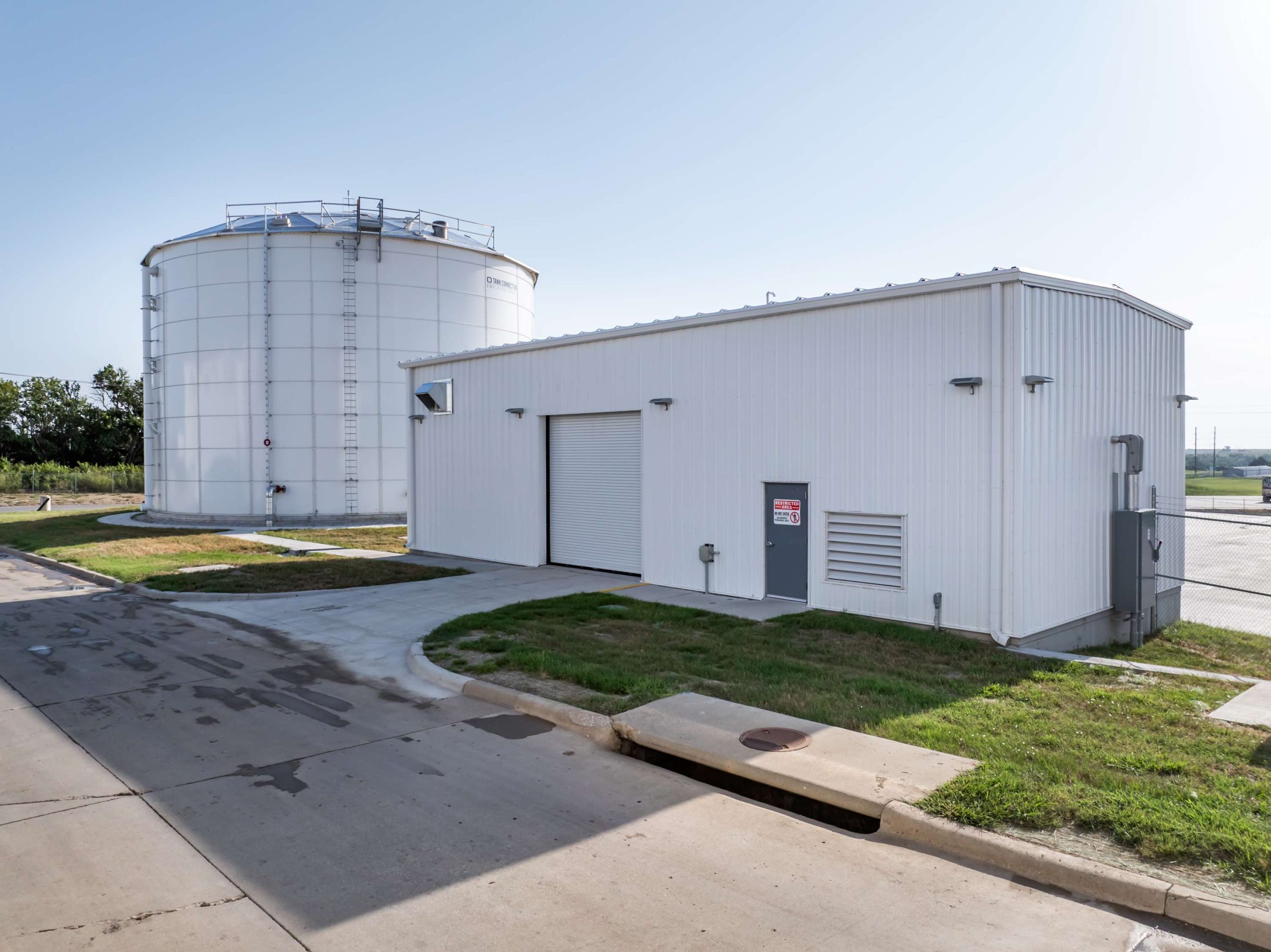
Working alongside MKEC, Creekstone identified the optimal solution as a new one-million-gallon ground storage tank paired with a booster pump station.
Increasing reserves and managing demand
By installing the new storage tank and booster pump station, Creekstone has significantly reduced its dependence on the city’s water infrastructure, ensuring the consistent water pressure, flow, and emergency reserve capacity needed to support continuous operations.
“The larger storage volume gives them a one- to two-day water reserve so that if they were to lose the city water supply from the water tower, they still have enough runtime from onsite reserves to carry them through until they can make corrective actions,” says Graham Lingg, mechanical engineer at MKEC.
In addition to emergency reserves, the on-site tank enables Creekstone to collaborate with the city to balance peak water demand.
“It gives them the ability to work with the city, so they’re not having to take water during peak demand time,” Lingg says. “They can refill the onsite storage tank during the evening hours or night hours while the city is asleep versus trying to demand water at two in the afternoon on a hot August day. This project improves the overall system efficiency and allows them to be good stewards of the resources entrusted to them.”
Under pressure
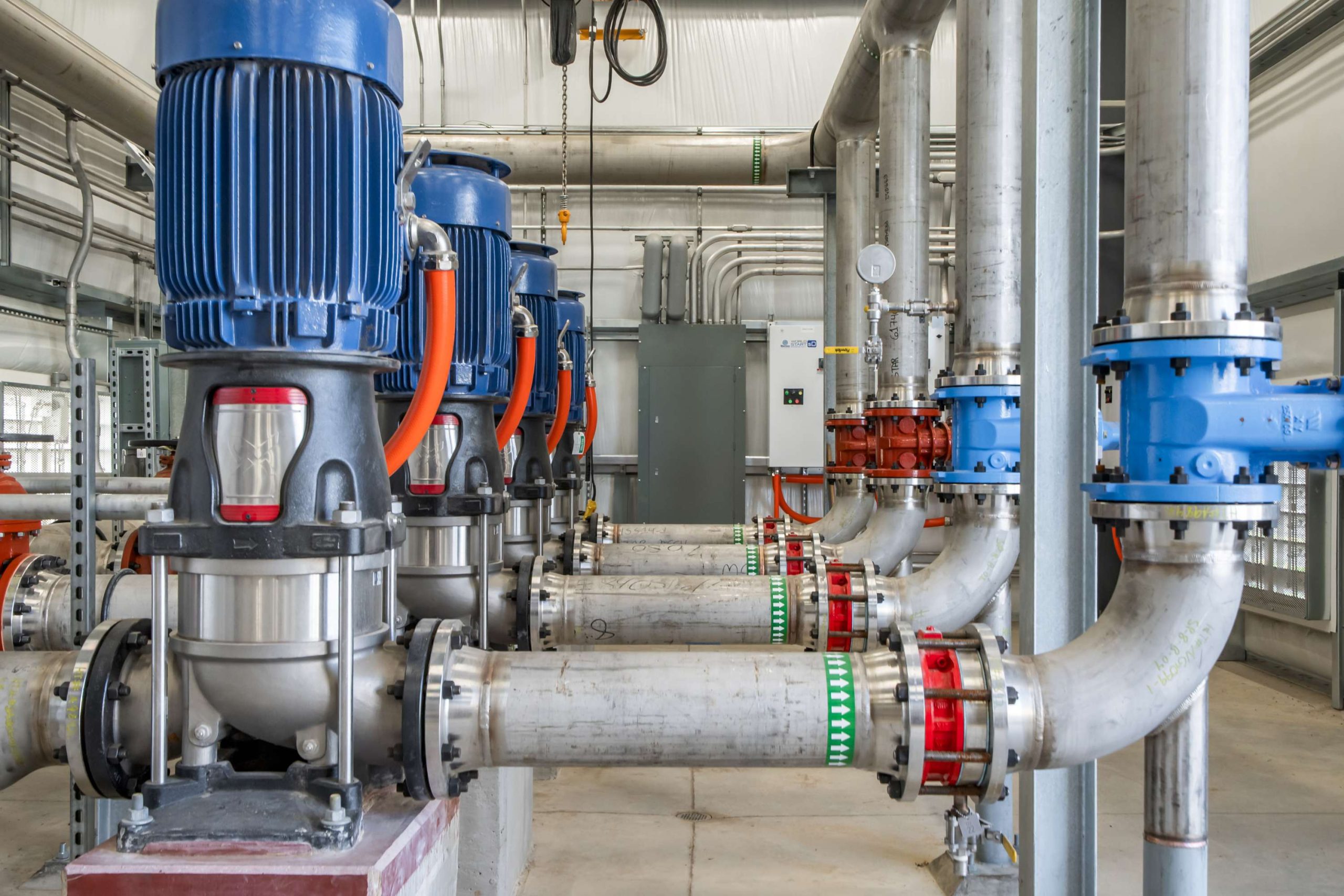
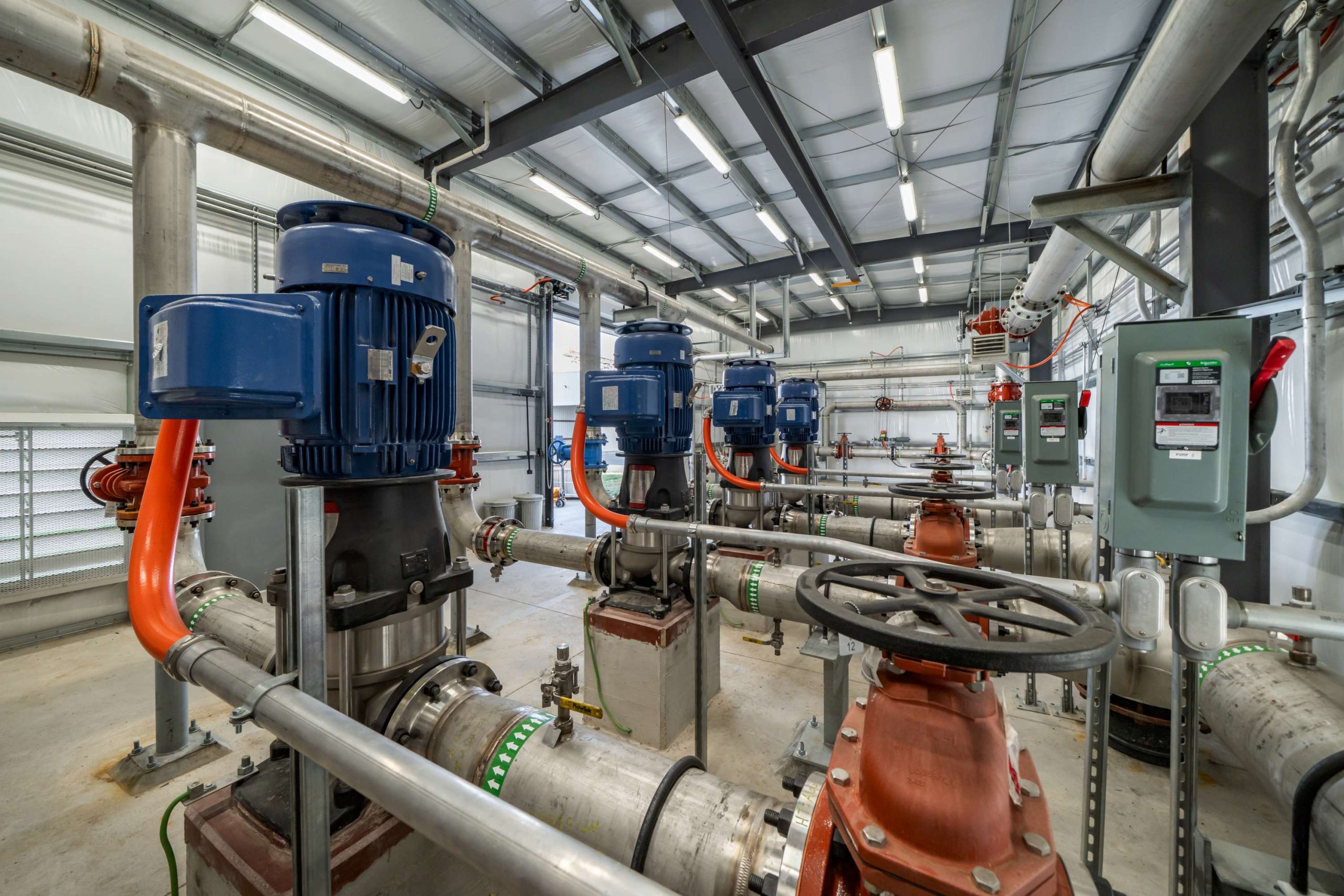
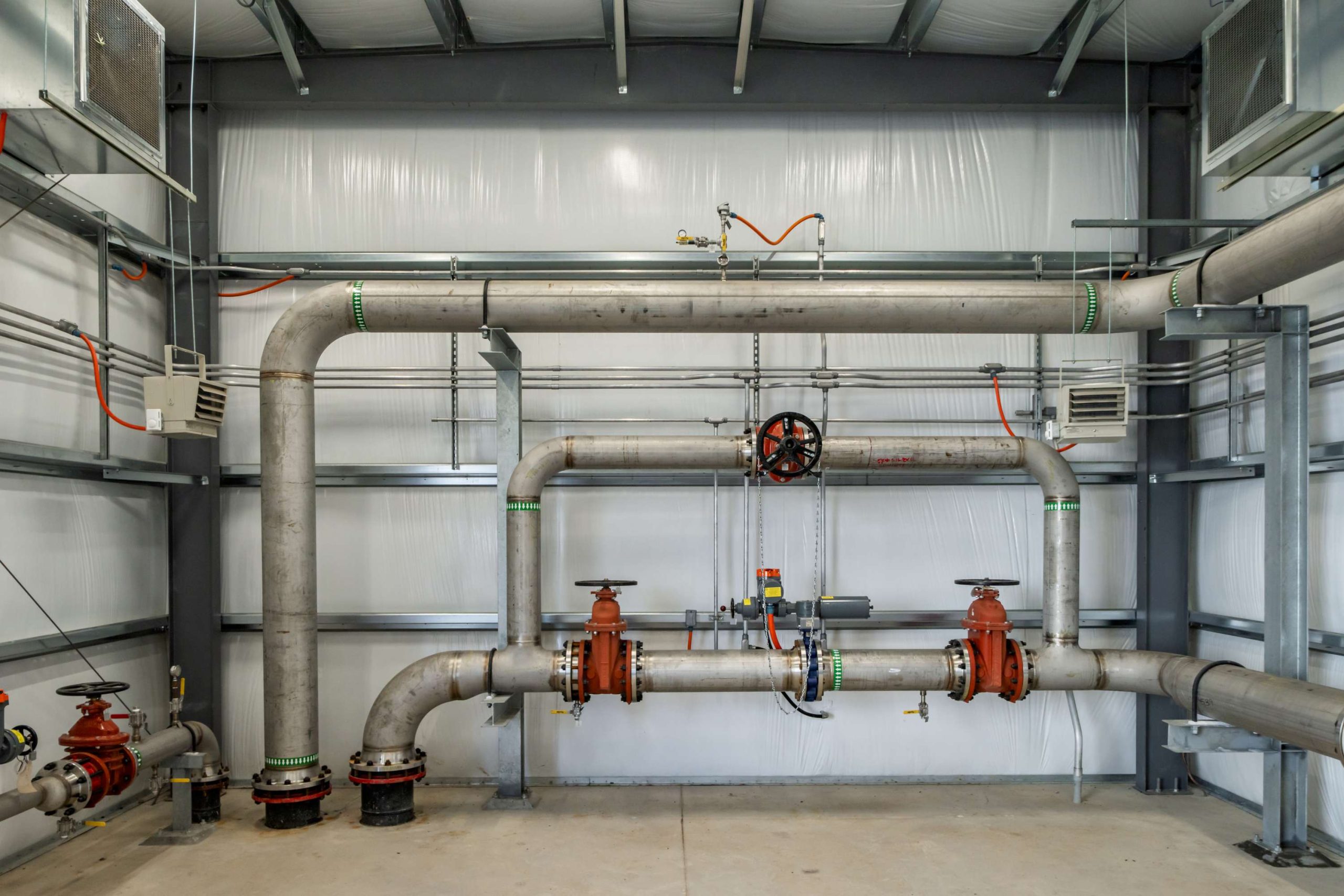
To solve the pressure problem, MKEC partnered with Hutton, the design-build contractor on the project, to design a pumping facility that uses two primary pumps with two backup pumps. The pumps went through a transformation in the middle of the project that resulted in cost savings for the client.
“We (MKEC) had pumps selected early in the project, but when we received the quote, we found that different pumps the owner preferred were significantly more economical than our original selection,” Lingg says. “So we made the change, which resulted in significant savings that helped offset some additional unforeseen costs in other parts of the project. Ultimately, collaborating with the owner and being willing to be flexible in our mechanical design and equipment selection reduced the overall project cost.”
MKEC was also able to efficiently design the pump facility through cross-discipline coordination.
“We worked closely with the project team to determine the optimal relationship between the tank water level and pump elevations,” Koster says. “Proper elevation design was critical. If the pumps are set too high relative to the tank, there won’t be enough suction head available as the water level drops, effectively making a significant portion of the tank’s storage capacity unusable. By carefully coordinating those elevations, we were able to maximize the usable volume of the tank while ensuring the pumps operate reliably under all conditions.”
Filling the tank
The tank construction required extensive upfront planning and coordination among the project team, particularly because the project was being delivered under a design-build approach.
“With design-build, the goal is to move quickly while still delivering the best solution possible,” Dinges says. “Because the storage tank was one of the project’s longest-lead items, it became an early priority. We finalized the tank specifications, obtained pricing, and placed the order as soon as possible. Getting that process started early was critical, since the tank required significant time for fabrication and construction and ultimately set the pace for much of the project schedule.”
Unlike many of our heavy industrial projects in the refined and unrefined products industries that require large-volume storage tanks, this project presented a unique challenge: the stored water had to meet strict potable and food-grade standards.
“One of the biggest considerations was that this is a meat-processing facility,” Koster says. “Because the water is used in areas tied to food production, we had to be especially mindful of water quality. Making sure the system met potable water and hygiene standards was critical to protecting both the product and the people consuming it.”
To fit the tank on the property, our civil team designed around an existing parking lot, removing a corner of the parking lot to make space for the tank.

Keeping the plant running
Another big challenge for this project was building and bringing the new system online without shutting down the plant for long periods of time.
“We had to figure out how to keep the facility functional during construction,” Koster says. “We were able to get some extra valves put in place on the existing line while the system was running to allow for that to happen.”
Working together
On a project like this, multiple MKEC disciplines are involved in addition to our construction partner, Hutton, therefore coordination is key.
Designers on the mechanical team worked with designers on the structural team to verify that the supports for the piping were built in the correct places, so “when the mechanical contractor comes in to set the pipe on top of it, it’s not six inches off or six inches too high,” Lingg says.
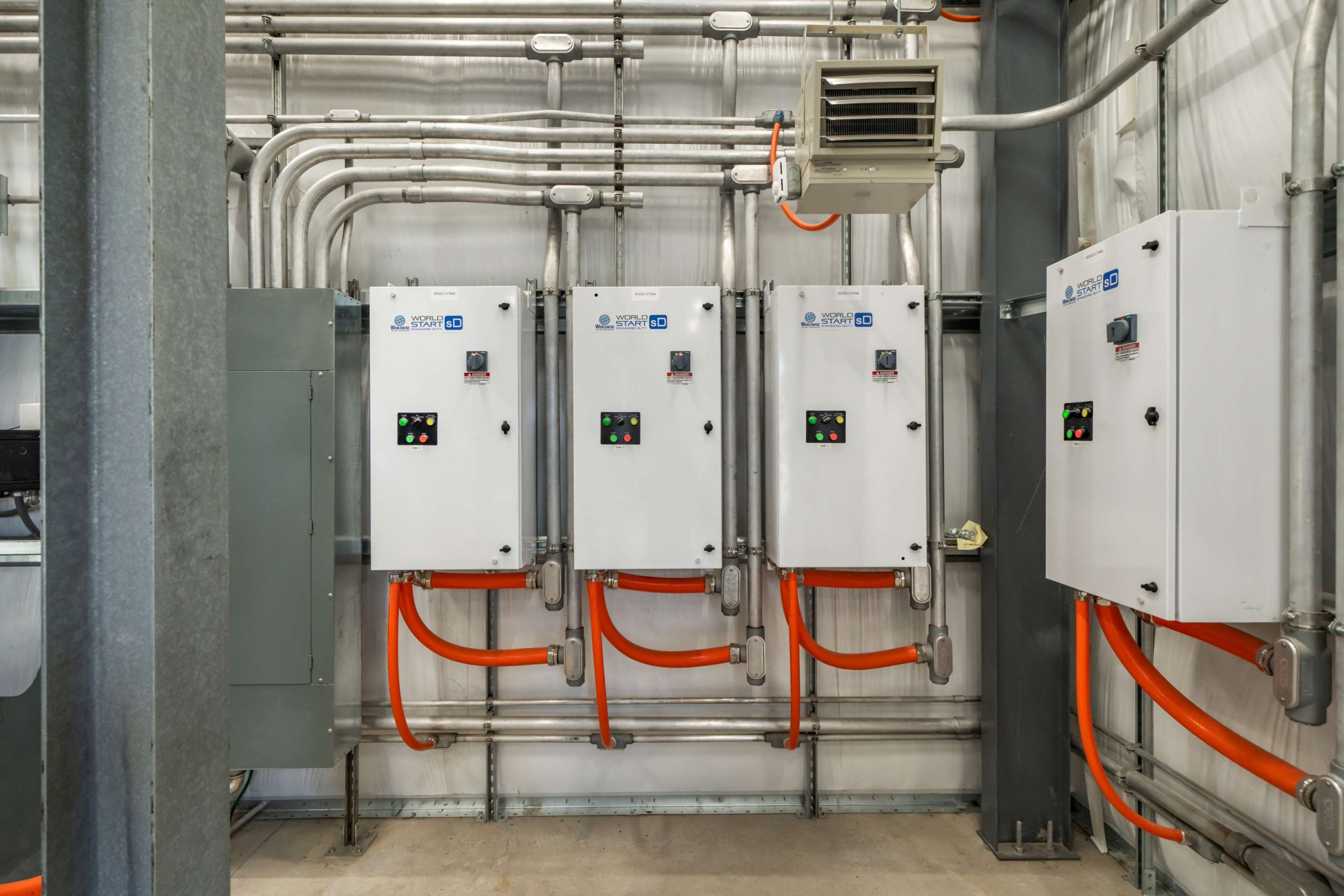
In addition, the instrumentation and electrical teams worked together so that when a controller tells a pump to turn on and off, it’s wired correctly. These are just a few examples of the way the project touched nearly every discipline within MKEC from civil and structural to mechanical, electrical and instrumentation.
All of our teams worked closely with Hutton to design a system that met the owners’ needs while taking into account construction challenges our construction partner faced.
“Everybody worked together and chipped in to help make this a successful project,” Lingg says.