
Connecting Communities with the New Flint Road Interchange
May 20, 2026
Most people don’t spend a lot of time thinking about highway exit ramps other than checking their maps app to see which one to take. MKEC’s transportation group, however, spends a lot of time thinking about them.
Adding a new interchange to a highway doesn’t just mean designing a new roadway; it requires coordination with multiple agencies and utility companies and taking into account the increased traffic load on existing roadways.
Improving regional mobility
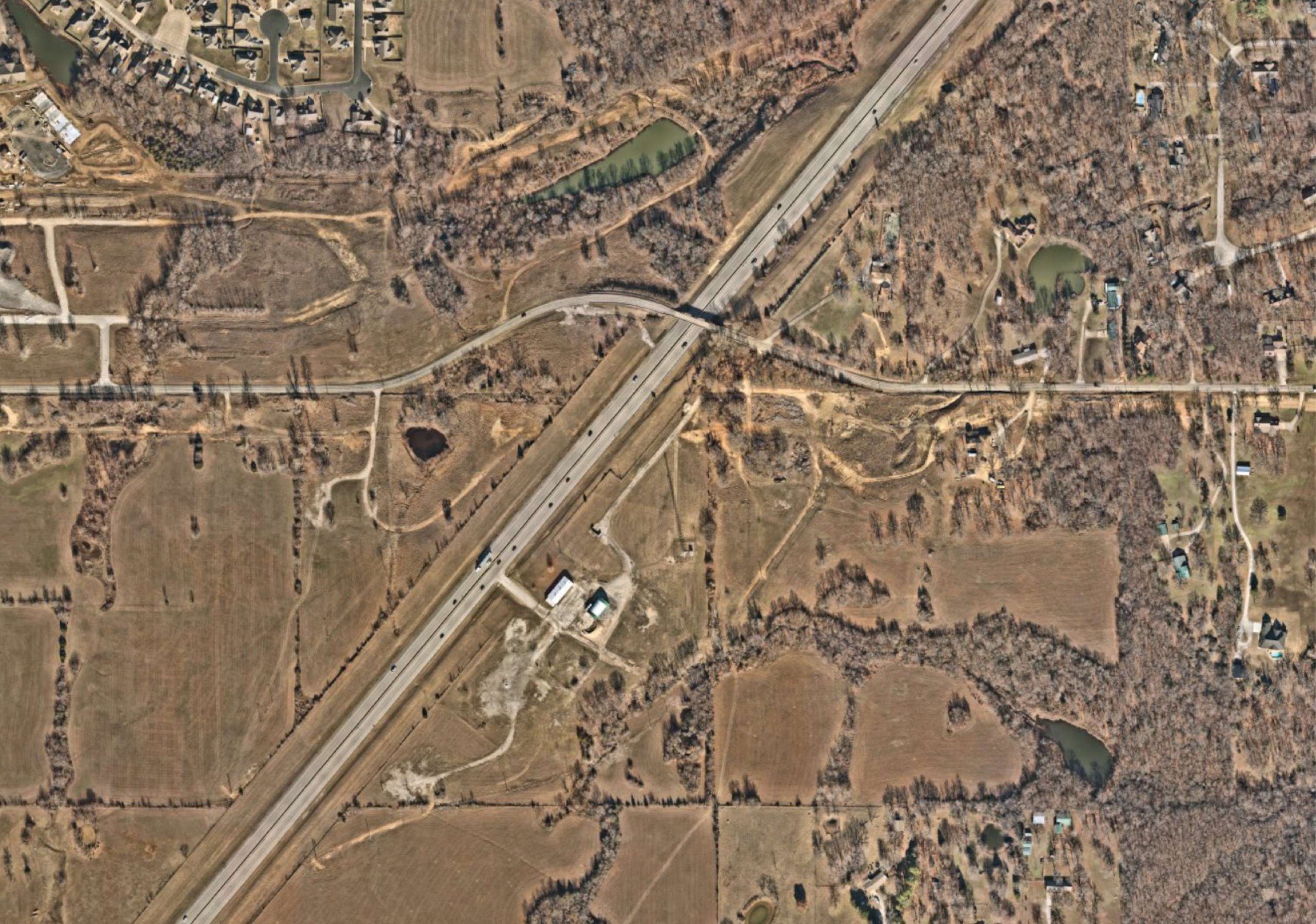
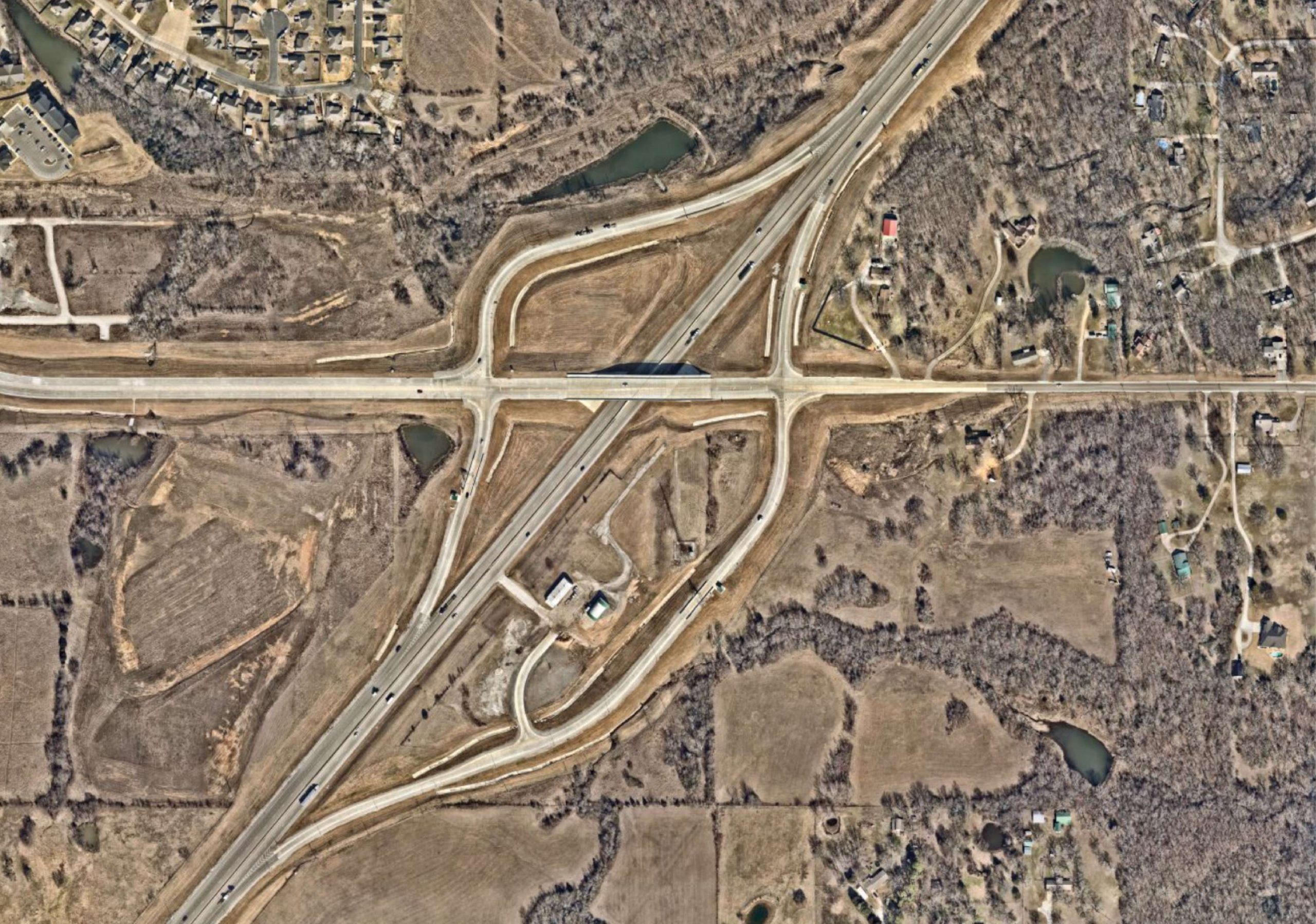
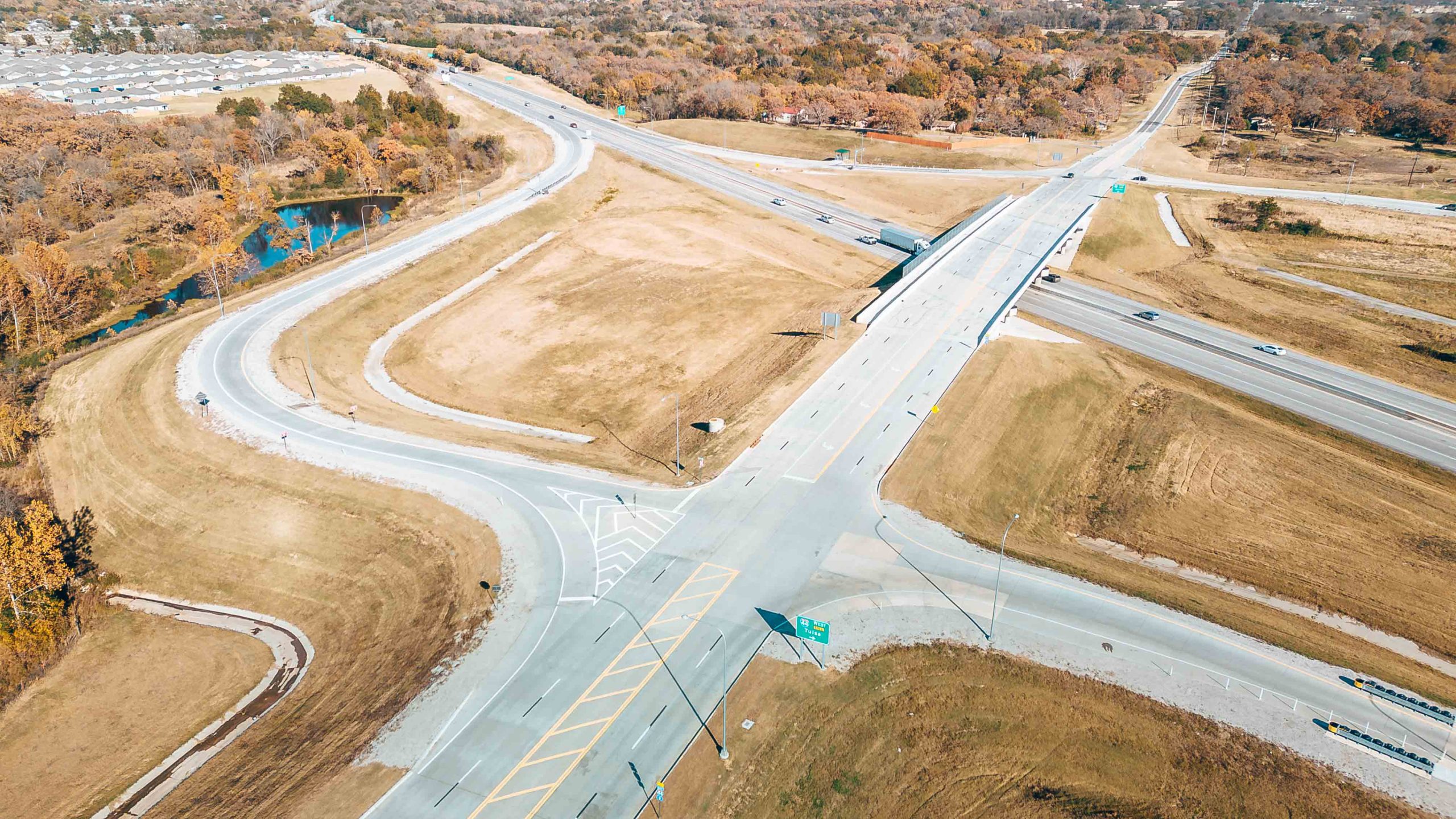
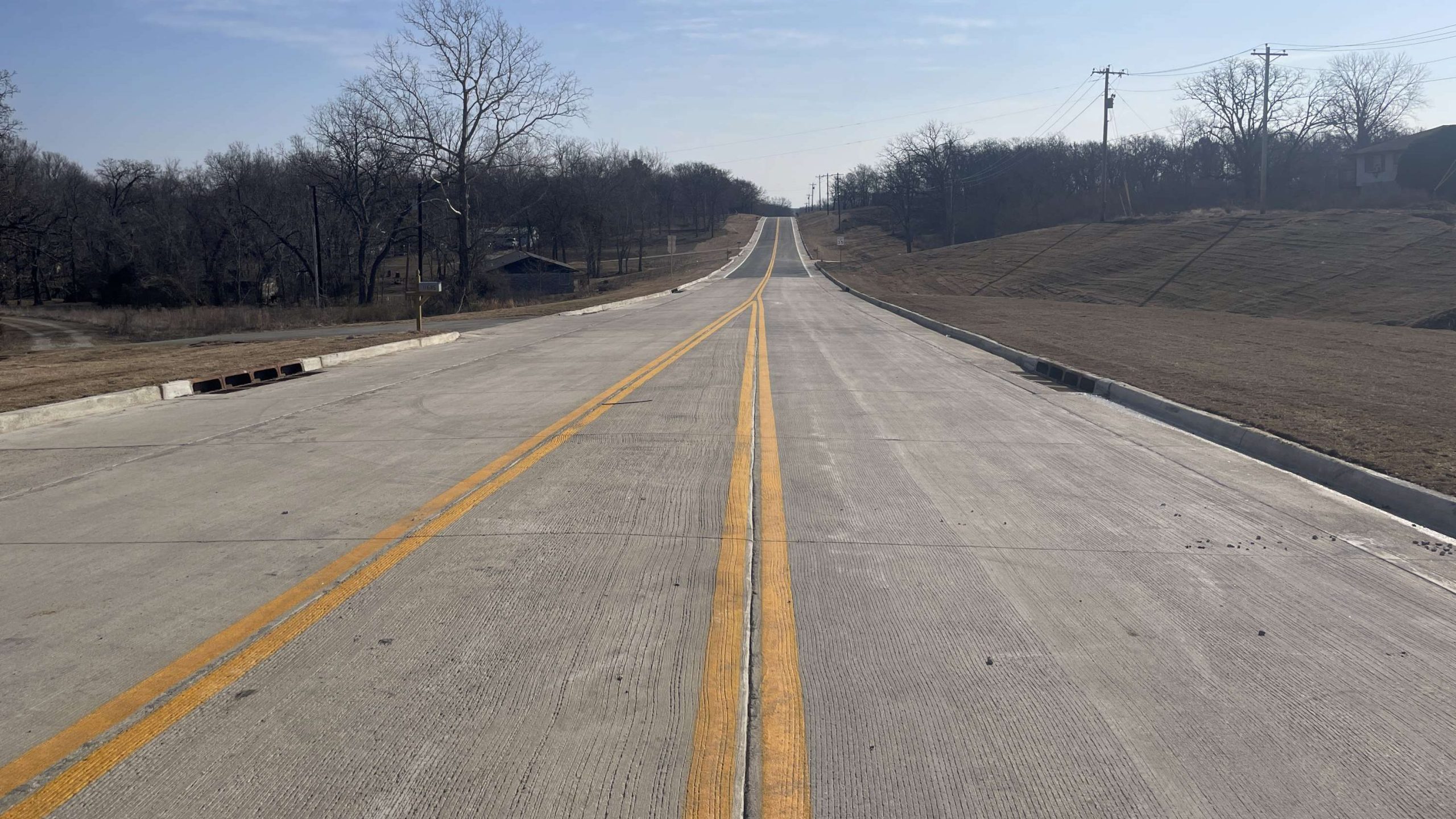
As part of a larger $64 million State Highway 20 realignment that replaced a narrow, two-lane road with a modern five-lane highway between Owasso and Claremore, Oklahoma, MKEC was tasked with designing a new interchange connection to the I-44/Will Rogers Turnpike for the new section of State Highway 20 on the south side of Claremore.
This collaborative effort completes a two-decade corridor enhancement aimed at improving regional mobility, easing congestion, and significantly bolstering public safety.
We first kicked off the project back in 2017 by conducting a study of several different interchange designs to connect the Will Rogers Turnpike to the future SH-20 Claremore Bypass. To figure out the best approach, we weighed key factors like traffic safety, road geometry, bridge design, and how the project would affect neighboring properties. We also dug into potential environmental impacts like risks to local farmland, wildlife, streams, and nearby neighborhoods.
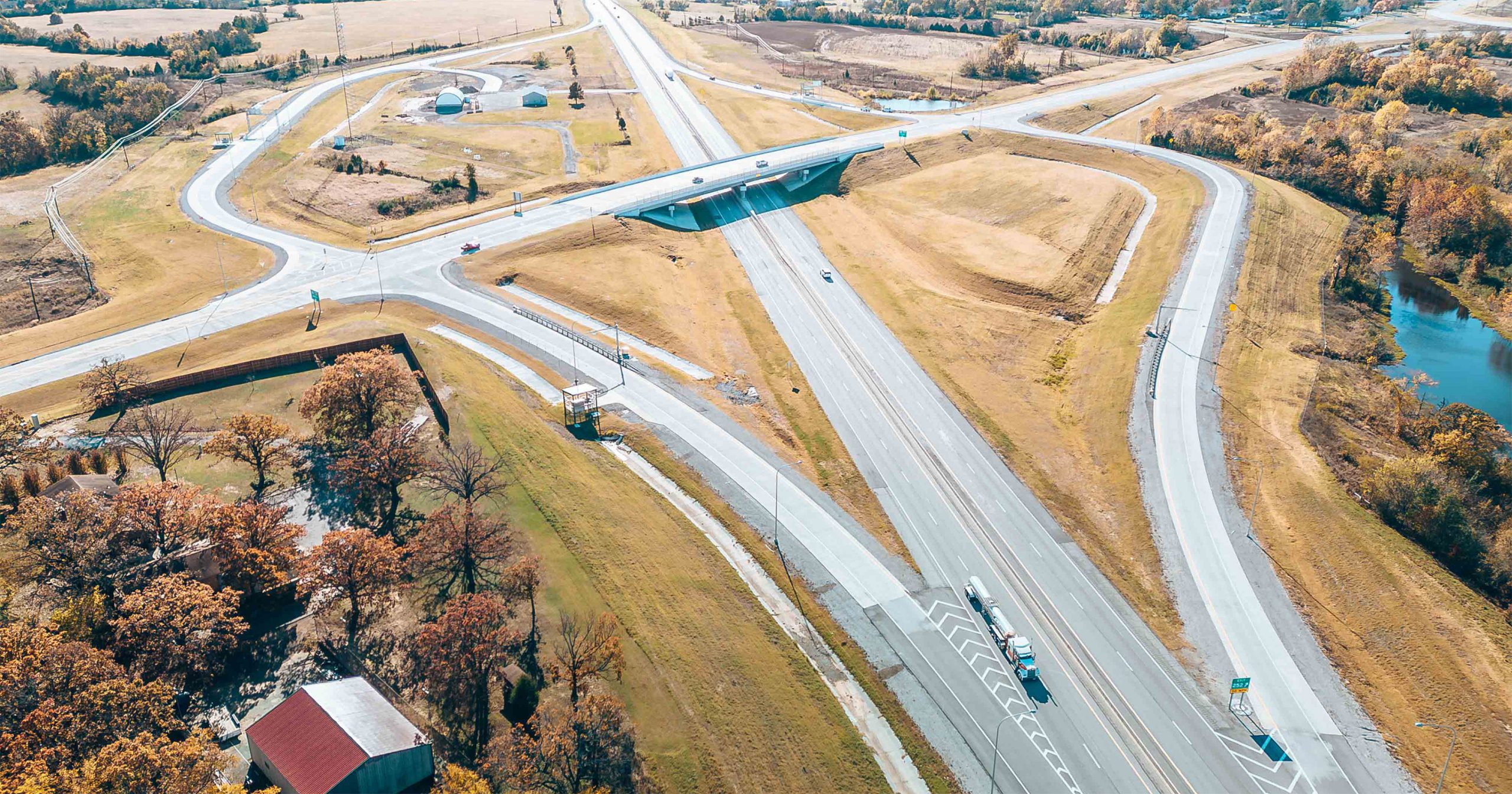
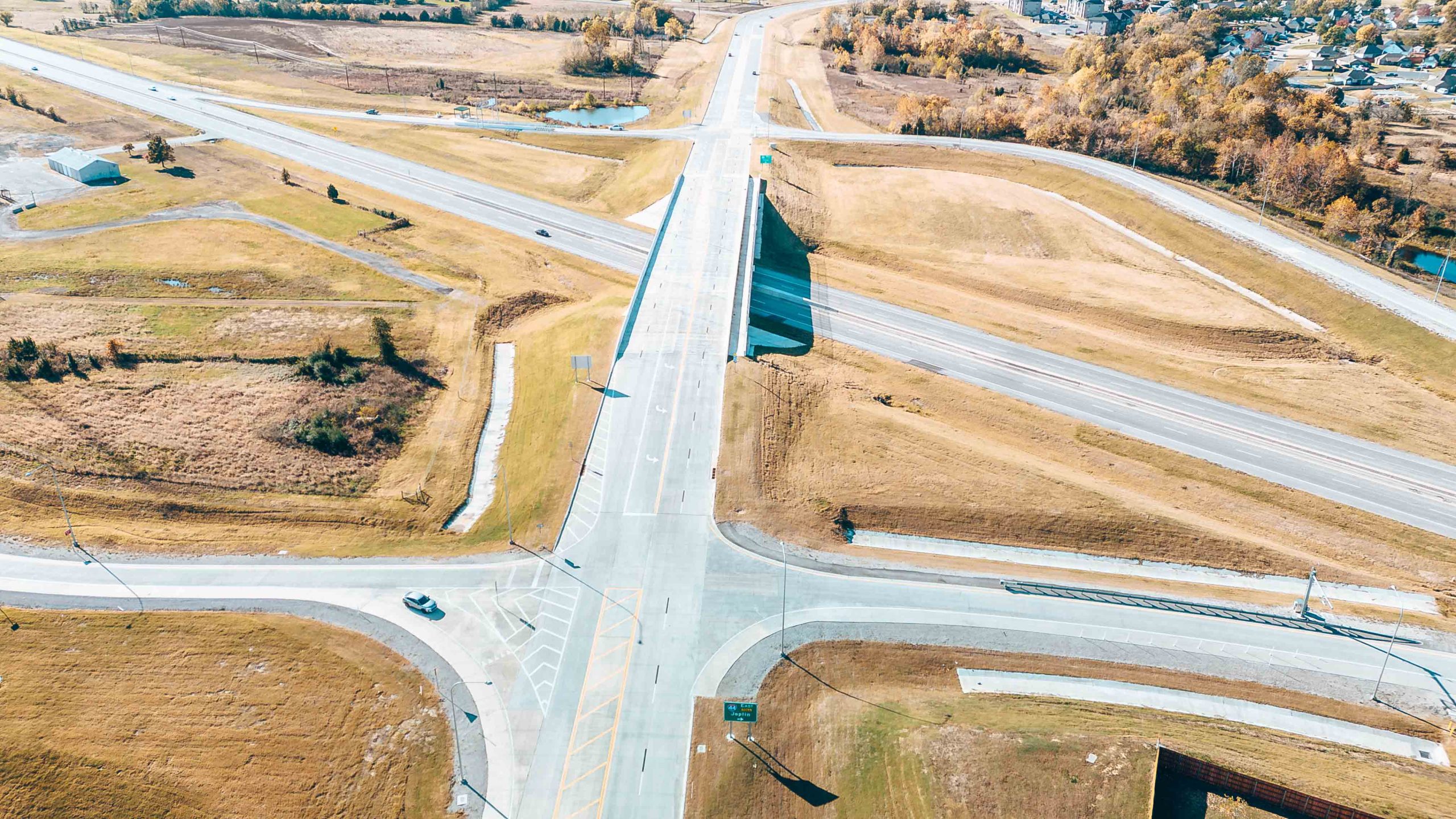
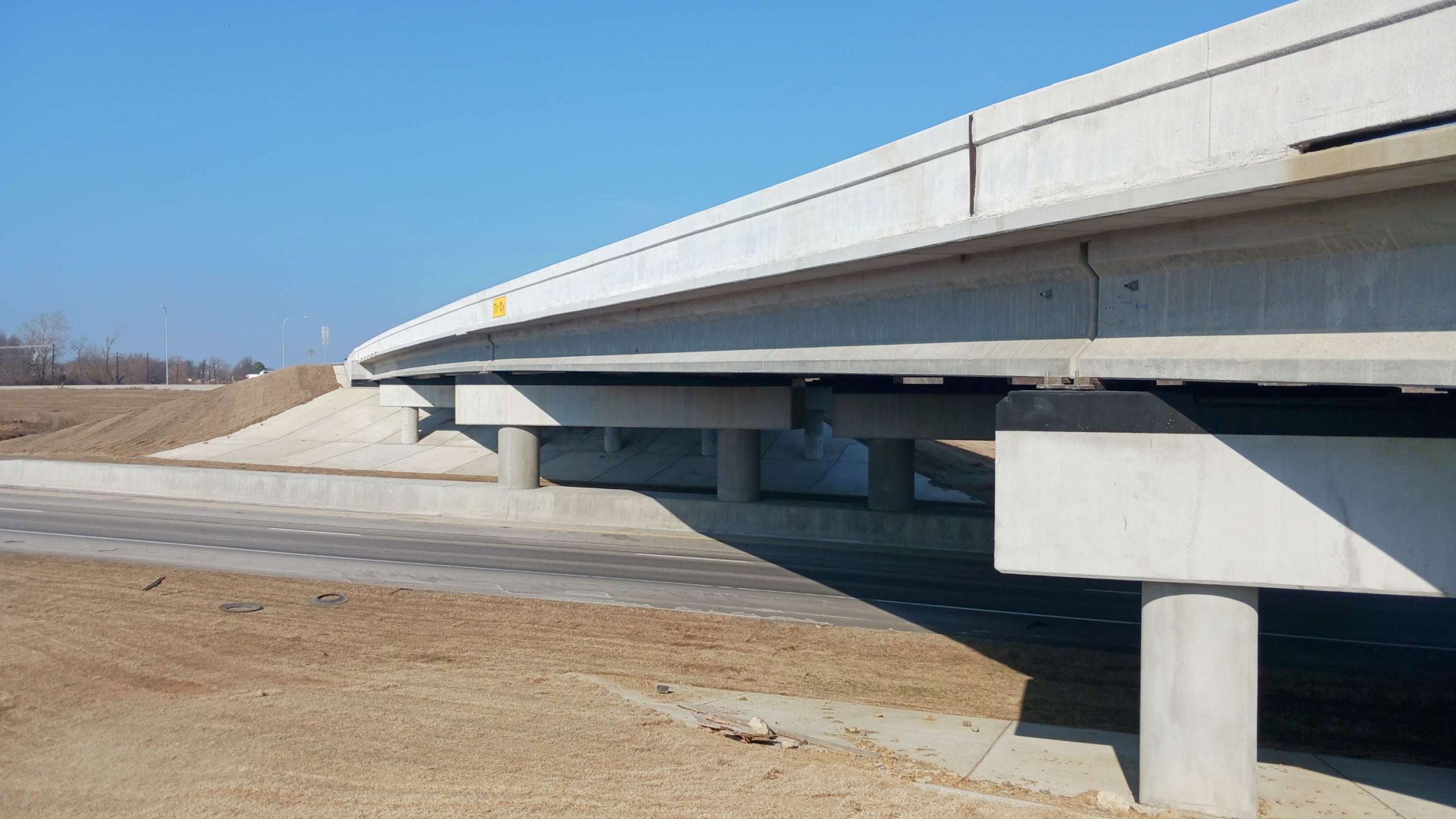
After putting together cost-benefit analyses for each option, our team mapped out the final design criteria and recommended the best path forward to the Oklahoma Turnpike Authority (OTA). Once the OTA gave the green light on the preferred concept, we moved into the final design phase which resulted in a functional interchange highlighted by a new four-span, prestressed concrete beam bridge.
Multi-agency collaboration
This project was unique because it involved multiple agencies, requiring close coordination and collaboration to ensure a successful project for all stakeholders.
“We worked with the Oklahoma Department of Transportation, the Oklahoma Turnpike Authority, Rogers County, and the City of Claremore,” says Chase Cole, project manager for MKEC. “It was definitely a multi-agency endeavor.”
When multiple agencies are involved, it means that funding for different pieces of the project is coming from different sources.
“Each one of those are different funding sources,” Cole says. “The county itself is working from a different group of funding, which triggers different requirements. Basically, the bigger the funding source, the more involved it gets. The level of oversight and required compliance increases accordingly. Certain requirements were only pertinent for ODOT and federal funding, while OTA-funded projects follow its own set of criteria and compliance obligations tied to that funding source.”
But it’s not just multiple funding sources that can complicate a project like this. With that many agencies involved, communication is key to making sure the different parts of the project come together at the right time.
“We really wanted the construction completed around the same time as the State Highway 20 bypass because otherwise it would just dead end,” Cole says.
Coordinating the timelines and funding requires communication between MKEC, the other engineering firms involved, and the agencies.
“We’re trying to coordinate with the turnpike and with ODOT and with the third-party engineering construction manager, as well,” says Jonathan Hisey, senior project manager for MKEC. “There are a lot of team members involved that need to stay informed during the project.”
Utility coordination
Another big aspect of the interchange project was the need to move utilities, which requires coordination with multiple utility companies.
The process begins with MKEC engineers creating a preliminary design, which we then share with the utility owners in the area and ask them to verify that we have everything marked in the right place.
“The overhead ones are pretty straightforward, but the underground ones can be more cumbersome,” Cole says. “For example, the water lines are older, and don’t have tracer wire. Most of the people who worked on them have retired. So, we know they’re underneath the ground, we just don’t know where they are. It can really be challenging in that regard.”
Identifying those utility lines requires us to work closely with the utility companies to make sure we have it correct to avoid problems when construction starts. After all the existing lines have been identified, we put together a relocation plan that we share with the utilities.
“We can’t tell the utility company where to put the lines, but we can suggest where they can go, and that tends to make things go a little bit smoother,” Cole says.
After the utilities are moved, we check them against the relocation plans and make sure we haven’t created any new issues with our planned construction.
“If you raise the road even though you’re not disturbing a pole you may still have problems with the lines being too short,” Cole says. “There’s just a lot of little aspects that you have to make sure you’re staying on top of.”
Directing the stormwater
A major challenge that our team encountered was directing and containing where the stormwater runs off. Since this interchange added a lot of new pavement to the site and an existing adjacent pond was drained to make space for the northbound onramp, it required thoughtful design to mitigate any potential drainage issues.
We utilized open and closed storm sewer systems to successfully direct runoff and also took into account the potential impacts to residential properties just east of the interchange. Creative concrete drainage structures on both sides of the two-lane roadway approach efficiently convey stormwater away from the roadway and the nearby homeowners’ properties.
Connecting a city
Much of our transportation work focuses on improving existing roadways and interchanges, so we jumped at the chance to create an entirely new interchange that would provide an additional connection for a city to the interstate system.
“This project added a new interchange to connect a city that’s right in the metro area to make a nice quick connection, so they could have access to the turnpike and get to the City of Tulsa really quickly,” says Greg Sparks, transportation manager at MKEC. When the new interchange opened in April 2025, all that collaboration, communication, and coordination resulted in a new path to travel for those going to and from Claremore, Oklahoma. An estimated 50,000 cars are utilizing this new interchange on a monthly basis, saving time in their daily commute and safely reaching the south side of Claremore with greater ease.